


Blog
International Polychaete Day: why we love polychaetes

Macroinvertebrates have long been a cornerstone of water quality analysis. Their condition informs us about changes in water quality, biodiversity and the presence of invasive species.


Alberto Scotti, Senior Freshwater Consultant
A recent study on freshwater invertebrates has shown that biodiversity recovery in European water bodies has stalled. But why this has happened, and what can we do about it?
Senior Freshwater Consultant Alberto Scotti participated in a pan-European study, recently published in the scientific journal Nature, entitled ‘The recovery of European freshwater biodiversity has come to a halt’. Alberto looks at how studying these tiny organisms can inform water strategy across Europe.
Freshwater invertebrates make an important contribution to ecosystems. They decompose organic matter, filter water, provide sustenance for other organisms and transport nutrients between aquatic and terrestrial ecosystems. Analysis of trends in taxonomic and functional biodiversity in macroinvertebrate communities over the last 50 years shows how, across Europe, initial successes in improving the ecological status of rivers have plateaued since 2010.
Legislation such as the EU Water Framework Directive (WFD) was designed to improve water quality and restore freshwater habitats. With measures such as better wastewater treatment in place under the WFD, macroinvertebrate biodiversity increased consistently up to the 2010s. Since then, however, recovery of biodiversity has stalled, with freshwater communities downstream of dams, urban areas and cropland least likely to experience recovery.
Across the 1,816 European rivers examined (including a large number of UK rivers), the study highlighted that more than 60% of the WFD-monitored sites do not currently reach the WFD objective of Good Ecological Status. This means that while past policies, notably the EU Urban Waste Water Treatment Directive, have been very successful, further actions are needed to continue to improve water quality. The need to engage with multiple stakeholders has become more critical, given new and persistent pressures on freshwater ecosystems including emerging pollutants, abstraction, climate change and the spread of invasive species.

Plecopteran nymph (photo courtesy of Alberto Scotti)
There is a clear need to adopt a more holistic perspective to protecting and improving river health. The study identified that stressors not directly related to the immediate aquatic environment (such as climate change and land use) were also tightly linked to biodiversity trends in Europe’s freshwater macroinvertebrate communities. The study also highlighted how large-scale measures to address biodiversity loss remain rare, especially for invertebrates, but that actions to revive the recovery could include:
APEM’s hydro-ecology team specialise in assessing the effect of human activities on freshwater ecosystems, from abstraction licenses and wastewater discharges to housing and infrastructure developments.
The studies we carry out seek to determine how multiple stressors act individually and in combination to influence the biodiversity of streams, rivers and lakes. New techniques that we employ, such as hydro-ecological modelling, are now helping us to disentangle the effect of these different stressors, so that we can provide locally-tailored, evidence-based advice and recommend to clients the most cost-effective mitigation measures.
Freshwater ecosystems are biodiversity hotspots, providing ecosystem services such as drinking water, food, energy and recreation. But they are also among the most vulnerable to biodiversity loss, and renewed efforts to deliver sustainable abstraction, tackle pollution and undertake hydromorphological restoration are urgently required if the hard-won biodiversity improvements achieved in previous decades are to be sustained in the future.
To find out more about our work in this area, please contact APEM here.
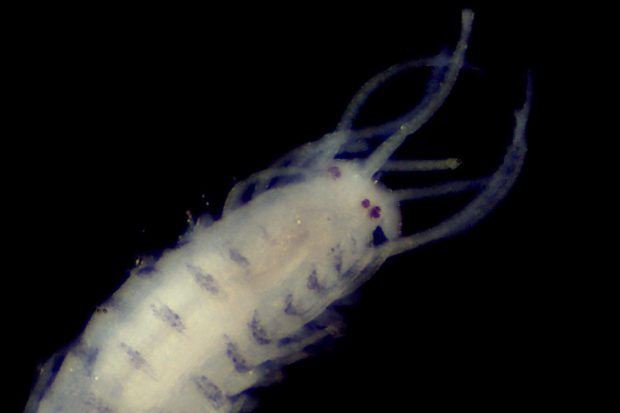
Today is International Polychaete Day to celebrate both polychaetes and researcher, Kristian Fauchald
+ Read more

Our survey calendar provides the best times to undertake specific surveys throughout the UK and Ireland in freshwater, terrestrial and marine environments
+ Read more

APEM have issued draft standard recording policies for north-east Atlantic macrobenthic samples, including a Taxonomic Discrimination Protocol (TDP)
+ Read more