


Blog
Getting it right – the importance of wildlife aerial survey de...


Our best practice approach to survey design for birds and marine mammals has been developed through years of practical experience, combined with the very latest advancements in technology.
Our clients throughout the world engage us to provide robust and reliable scientific data for developments such as offshore wind farms. This includes the collection of baseline data, the provision of population estimates to inform environmental impact assessments (EIAs) and collecting pre- and post-construction data.
Each survey is individually designed to monitor target species, including birds and marine mammals, safely and with no disturbance to people or wildlife, using statistically robust grid-based or transect-based designs. Our experience of delivering thousands of surveys across the world means that we are best placed to advise about the nuances that the regulator will be looking for. We’ll offer the best approach to presenting a robust data set as well as options for sound statistical analysis. A correctly planned and executed baseline survey helps to accelerate a more efficient planning process, saving time and money.

By using ultra high-resolution imagery, we ensure the highest identity rates when it comes to species surveys. The quality of our imagery ensures that we can pinpoint the diagnostic features of mammals and birds such as:

Advancements in technology mean that digital aerial surveys not only provide more accurate counts but are also more cost-effective than traditional boat surveys. Aerial surveys are unbiased by the strong attraction that many seabirds have to boats associated with fishing discards, providing our clients with a permanent record that can be recalled and referred to at any point in the future.
Our experienced team will manage the whole process from start to finish. We use our own equipment from the survey design through to the actual survey flight(s), and every flight has a task specialist onboard who is constantly reviewing the data captured, making immediate adjustments if required and mitigating the risk of needing to fly another survey.
Imagery is collected at a range of resolutions starting from 1cm GSD (Ground Sampling Distance) upwards, using a range of custom-made specialist sensors and cameras, including LiDAR. This gives us confidence in recording accurate and precise flight heights, directions of movement, behaviour and – where possible – age and sex of the birds.
APEM’s technical consultancy support includes population modelling, collision risk modelling and advice and guidance on meeting legislative requirements in the marine environment, including impact assessment and Habitats Regulations Assessment (HRA).
The team at APEM would be happy to answer any questions you have or to demonstrate our technology. Please use the form below to get in touch.
Read one of APEM’s blogs, news articles or case studies to find out more.

Every wildlife survey is different, and at APEM we pride ourselves on understanding our clients’ needs and getting the design of a survey right first time
+ Read more

Vineyard Wind have announced that APEM has been contracted to complete a second year of monthly surveys located off the coast of Massachusetts
+ Read more
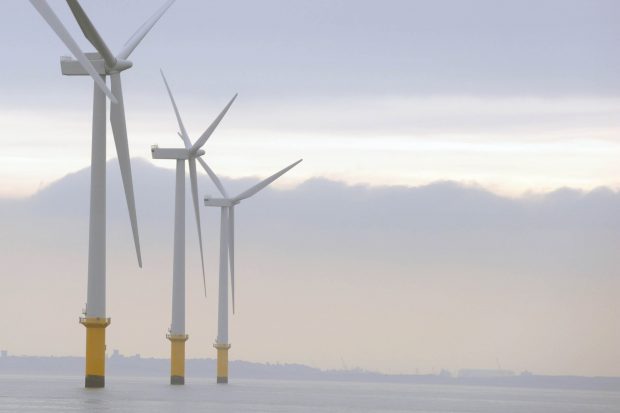
The requirement for power generated from renewable sources continues to rise and the UK Government has pledged to power all homes with wind energy
+ Read more