


News
A lasting relationship – Salford Quays


APEM are one of the leading providers of algal bloom assessment and management. We provide professional advice on the source and impacts of algal blooms, and monitoring and management options.
Algal blooms are an increasing problem. Changing conditions within water bodies, such as an increase in nutrients, temperature, sunlight or water column stability, can make them more suitable for algal growth.
Excessive algae can cause a number of problems by affecting the transparency, oxygen and pH of the water column, with subsequent effects on the animal and plant life of a body of water, and issues of blocking/clogging of filters during water treatment.

Algal blooms and the breakdown of certain types of phytoplankton, such as cyanobacteria / blue-green algae, can also be toxic to fish, birds, mammals and humans. This can have a considerable impact upon the amenity and recreational use of the water. They can also cause taste and odour issues affecting drinking water resource availability.
Algal blooms are becoming an increasing problem throughout the world year on year, and this issue is only expected to get worse due to climate change. An additional challenge is having to address the effects of climate change on watershed hydrology, temperature, mixing and nutrient loading/cycling dynamics.
An increasingly common scenario that promotes bloom development is a period of excessive rainfall and nutrient runoff followed by prolonged drought and heat wave conditions. Additionally, earlier spring warming and later autumn cooling results in a longer growing season, enabling blooms to develop early and persist for longer, even occasionally forming in the winter.


The APEM team has vast experience of studying algae from all over the UK and Ireland and provides high quality algae identification. For recreational monitoring purposes our in-house laboratory provides rapid analysis of samples, typically within 24 hours, with results being compared with the World Health Organisation guidance for the protection of health from the presence of blue-green algae.
Our consultancy team has extensive experience of undertaking projects to investigate algal bloom problems in water bodies. This includes identifying their source, diagnosing the causes of bloom development, identifying producers of taste and odour compounds 2-MIB and geosmin, and advising on a range of management solutions, including light limiting dye, barley straw, hydrogen peroxide, ultrasonic, eco-system manipulation, aeration, reed bed/wetland creation, sediment capping, sediment dredging, phosphorus stripping and diffuse source management.
We provide this advice and technical support to clients in a wide range of situations, from small privately owned ponds to water company reservoirs and water bodies used for recreational purposes.
Salford Quays
APEM have been retained as specialist water management consultants since 1987 to monitor and manage the water quality and ecology of the Inner Basins on behalf of Salford Council.
2012 London Olympics
Advising the organisers of the 2012 London Olympics on biosecurity measures to minimise the risk of contamination of the Eton Dorney rowing lake.
Glasgow Commonwealth Games
Developing a range of measures to improve the water quality of Strathclyde Loch to make it suitable for the Glasgow 2014 Commonwealth Games triathlon swim.
Crosby Marine Lake
Managing problems with blue-green algal blooms at Crosby Marine Lake on Merseyside for Sefton Council.
Drinking water reservoirs
Investigating the causes of and management of algal blooms in numerous drinking water reservoirs.
Waterlink
We have worked with a Belgian water company to prepare a raw water source management plan with the aim of reducing the levels of algae in their system. This included prevention, monitoring and treatment requirements.
Gladhouse
APEM have worked on behalf of Scottish Water to investigate issues with 2-MIB in one of their source reservoirs. This programme includes investigation of intra and extra cellular MIB.
Severn Trent Water
We have worked with Severn Trent Water to investigate the cause of algal blooms in one of their reservoir systems feeding a water treatment works. The reservoirs have been subject to large algal blooms (dating back to at least the 1980s), and on several occasions these have been so severe that the water treatment facility has been shut down, sometimes for several weeks. APEM was commissioned to examine the available data from the system, in order to identify options for managing and controlling algal blooms in order to reduce impacts on the operation of the water treatment works.

The team at APEM would be happy to answer any questions you have, please use the form below to get in touch.
Read one of APEM’s blogs, news articles or case studies to find out more.

Since 1987 APEM Ltd have been supporting Salford City Council to monitor and manage the water quality and ecology in Salford Quays
+ Read more
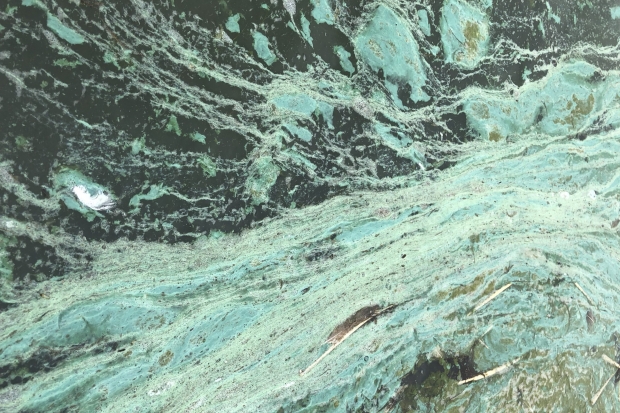
Algal blooms can cause a whole host of water quality issues and can be toxic to fish, birds, mammals and humans and produce taste and odour compounds
+ Read more

After a hot and dry summer, here at APEM, we're preparing advise further on the management of algal blooms following the recent downpours
+ Read more