
Where development or construction activity is taking place in intertidal and coastal areas, specialist avian surveys for monitoring and impact assessments need to be undertaken.
APEM are experts in this area, offering a complete range of services from carrying out surveys to performing desk-based studies, data handling, modelling, reporting, stakeholder liaison and impact assessments.
Before development works start, it is essential to fully understand the environment and habitat. A desk-based study will provide evidence about whether the site may cross or interact with, coastal, intertidal and nearshore sites with ornithological interests (including designated sites), and if data are in existence already to support an assessment. APEM’s team are well versed in such studies and understand how best to gather data for the requirements of our client’s project needs.
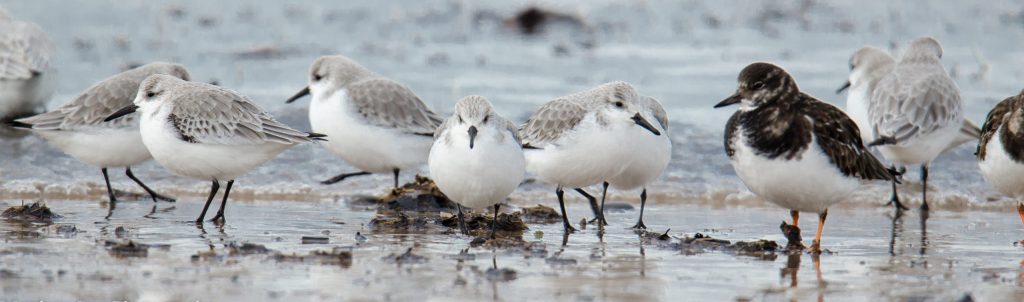
Sanderlings and Turnstones captured by APEM’s Matthew Boa
For intertidal bird surveys, timing is key. Knowing when to start is important. APEM would typically recommend that non-breeding period surveys run from September to March, to consider the autumn and spring passage seasons and the core winter months. However, some surveys may need to run through a full twelve-month cycle and if certain more sensitive species are known to visit a site or birds are known to visit outside of the core months, surveys may need to start in August and/or finish in April or May for migratory considerations. Equally, should sites be identified at an early stage as being less attractive to waterbirds there may only be a requirement to run surveys in the core winter months between November and February.
APEM ensure that the vital information is captured, saving time and money where possible and making sure that we meet legislative needs as well as following relevant guidance on best practice.
We understand what questions need to be answered for our client’s projects, for example, identifying roosting or feeding areas of interest. With extensive knowledge of legislation and guidance on surveying best practice throughout the UK and Ireland, we make sure that the methods to be used meet all requirements. This may need to consider local, regional, national, European and international designated sites and protected species to support any baseline characterisation and impact assessments.
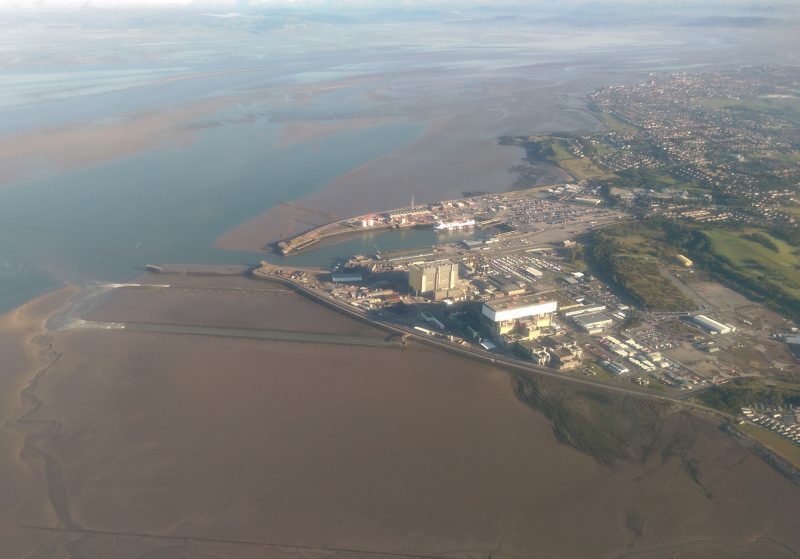
Heysham Nuclear plant where APEM have undertaken intertidal surveys
APEM’s expert ornithologists design intertidal surveys that are robust, enabling baseline characterisation for sites and informing an impact assessment of a development of any size and scale.
Drawing on their collective extensive experience of intertidal bird surveys, the team ensure that each survey meets the needs of our clients and the regulators including:
Our surveys provide data on many species, including but not exclusively:
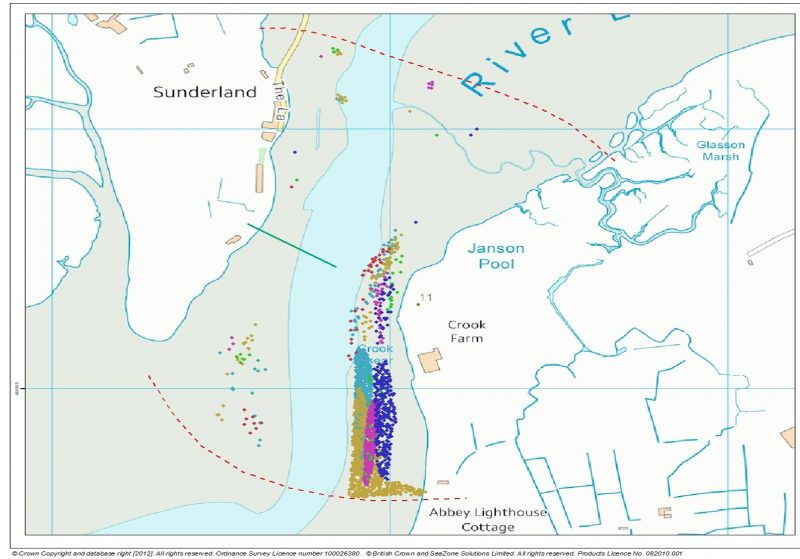
An example output of Oystercatcher populations delivered by APEM
The APEM team of bird surveyors are located throughout the UK and Ireland, collecting data in digital format whenever possible using in-field digitisation techniques, suitable for digital EIA and providing our clients with both time and cost efficiencies.
Our solution-driven intertidal bird surveys can take many forms, from basic WeBS style counts to detailed daytime and nocturnal TTTCC surveys in the field. The ornithology consultancy team supports our clients at all stages of development from desk studies, to data collection and through with evidence-led ornithology impact assessments, reducing risk and increasing consent success wherever possible.
Services range from desk-based studies, field surveys, data handling and modelling to reporting, stakeholder liaison and impact assessments.
Data can be presented using GIS (both QGIS and ArcGIS) or plain tabular formats following our robust review and quality assurance processes to allow presentation of data to meet our client’s needs.
We are also experts at both client and stakeholder engagement to help provide support and agreement on our data collection methods that inform our studies, tailoring them to our client’s needs whilst also accounting for stakeholder guidance and opinions.
The team at APEM would be happy to answer any questions you have. Please use the form below to get in touch.


