


News
Oh Christmas tree, oh Christmas tree

Fisheries experts predict that the number of salmon in a Scottish fishery could increase by as much as 1,500 per year after water started flowing regularly in the River Garry for the first time in 60 years, following a landmark project supported by APEM.

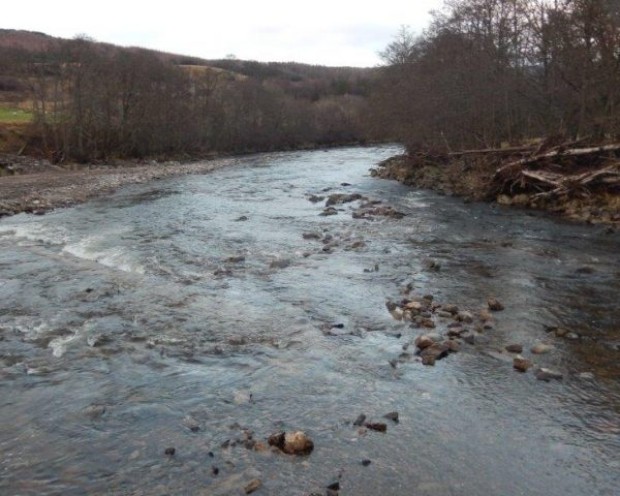
Until last year a ten mile stretch of the upper River Garry in Perthshire – a tributary of the River Tay – had been without a consistent flow since the 1950s, when work on a hydropower scheme cut off its water source.
Behind the project to return the river to life is a highly successful partnership between energy giant Scottish and Southern Energy (SSE), the Scottish Environment Protection Agency and the Tay District Salmon Fisheries Board.
Jeremy Williamson, SSE’s director of renewable operations, said:
“SSE has been delighted to play our part in restoring the water flow and allowing salmon back to the upper Garry. We want to ensure that we balance the nation’s need for power with our environmental responsibilities.
Although restoring the water in this stretch of the River Garry will result in the loss of potential hydro energy, we recognise our responsibility to ensure that we manage the waters carefully where we operate our hydro assets and hope that the work to restore the River Garry will help create a sustainable population of salmon in this stretch of river.”
APEM’s part in the project has spanned over a decade and involved teams from across the company in carrying out habitat assessments, walkover surveys, aerial surveys, geomorphology assessments, hydrological modelling and fish rescues.
Based on this and other work the project partners were able to put together a plan for releasing more water from the hydropower scheme into the river. This would help to restore its flow for the benefit of its ecology and wildlife.
Most recently APEM’s field scientists used electric fishing techniques to relocate larval lamprey prior to the removal of a weir. Above the weir at Struan changes to the water flow had created areas of fine silts that were ideal habitat for lamprey larva to develop in. But with flows on the river restored and the weir scheduled to be removed there was a danger that these fine sediments could be flushed away and with them the young lamprey, which were moved to the safety of suitable habitat downstream.
Back in 2009 the company’s field scientists carried out walkover surveys on the river to identify different kinds of habitats and assess their importance for fish and other species. Hydrological surveying at seven sites allowed the creation of habitat models.
And in 2007, APEM completed aerial surveys of the river that measured the grain size in sediments along 20 km of the riverbed, helping scientists to understand the river’s ecology and potential.
Pauline Silverman, who specialises in hydropower at the Scottish Environment Protection Agency, said:
In terms of science, there is a limited set of data and understanding of the direct relationship between flows and ecology: how much water do fish need to re-colonise a river that has been without flow for decades?
There is no definitive answer to actively manage flows to ‘mimic’ nature so we had to work together to find a solution that would work for the environment and the economy.
What we have as a result is a relatively new and innovative approach to river management in Scotland, and there is no doubt that many people will be excited to see how the river develops over time.
For more information on salmonid habitat mapping, download the manual: Restoration of Riverine Salmon Habitats – A Guidance Manual.
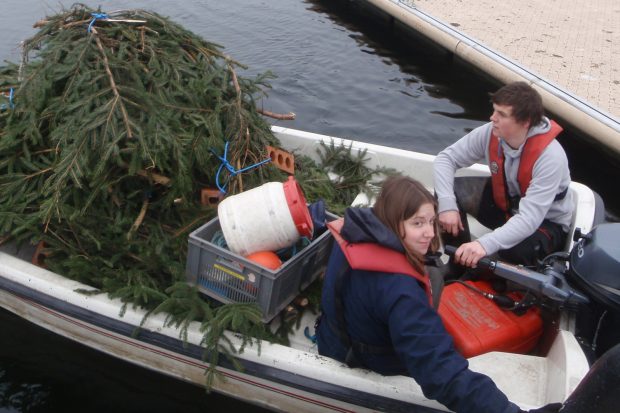
Some of the millions of discarded Christmas trees this year will end up in Salford Quays in Manchester, where scientists use them to gather fish eggs
+ Read more
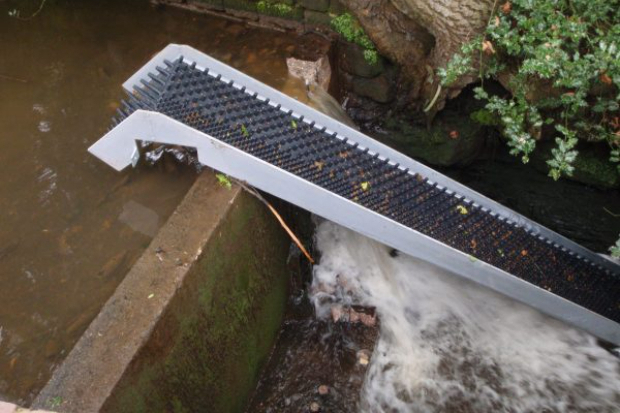
Three fish passes have been installed and two weirs removed on the River Worfe in Shropshire
+ Read more
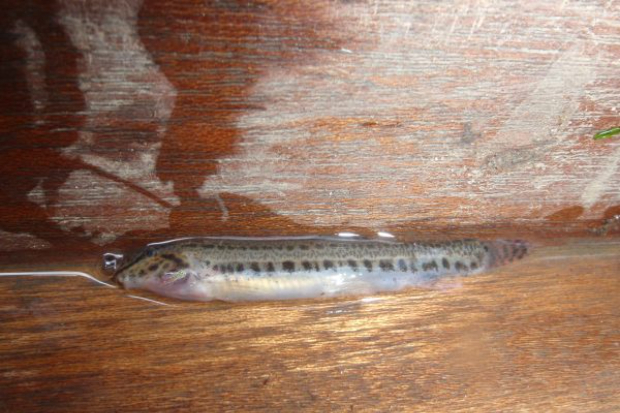
Fisheries experts from APEM have helped to update important environmental guidance covering the monitoring of spined loach on conservation areas
+ Read more