


News
A lasting relationship – Salford Quays


APEM have over 30 years’ experience in projects to monitor water quality, ensuring that water bodies are safe for sport and recreation purposes.
Our UKAS accredited methodologies and laboratories place APEM at the forefront of algal analysis and are trusted by water companies, government regulators, water sports centres and local authorities throughout the UK and Ireland.
Water quality for open water swimming
APEM’s biologists have extensive experience in assessing water quality by providing bespoke blue-green algae and bacteriology monitoring and analysis for a wide range of water bodies and clients, using our UKAS accredited methods.
We offer a range of options from analysing single samples for the presence or absence of organisms, to designing full assessments and providing pre-event and routine monitoring for lakes with regular users such as open water swimming. We also offer advice and design mitigation for any issues identified.
Blue-green algae and bacteriology
Our expert analysts frequently advise not only private clients but also regulators, environmental agencies, water companies and local authorities.
APEM have been actively involved in a number of intensive water quality management and monitoring programmes for triathlon and swim events, providing high-quality, accurate data to enable the organisers to decide whether swimming should be permitted.

Events included the 2002 Manchester Commonwealth Games triathlon and our ongoing monitoring at Salford Quays, the Open Water Marathon Swim at the Olympic site and numerous Iron Man UK events, as well as long-term monitoring of Liverpool Docks.
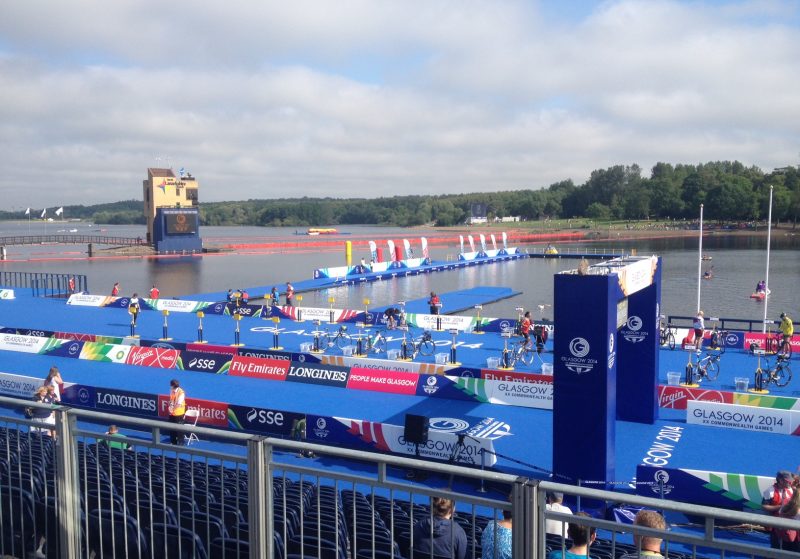
APEM were commissioned to produce a management action plan for blue-green algae and bacteriology for this high-profile event. We developed a sampling strategy for cyanobacteria and bacteriology to be implemented at each venue, detailing the number of sampling points and frequency of sampling.
Water sports had historically been suspended at Strathclyde Loch due to blue-green algae and elevated bacteriological loads. APEM analysed historical data and identified management options to improve the water quality to the standards required by the International Triathlon Union. This included the creation of a designated swim area, separated from the main loch, along with chemical treatments to reduce the risk of an algal bloom.
APEM were contracted by the National Open Water Coaching Association to provide monitoring of blue-green algae and bacteriology of lakes used regularly by open water swimmers from all over the UK. The results were used to inform risk assessments to protect the health and safety of water users.
About blue-green algae
Blue-green algae are found in fresh, brackish and marine waters throughout the world. Many species produce toxins known as cyanotoxins. Exposure to cyanotoxins through contact with skin, drinking or accidentally swallowing and inhaling affected water can cause a wide range of symptoms in humans and animals, sometimes serious. These include rashes, skin and eye irritation, blisters, stomach cramps, vomiting, nausea, diarrhoea and liver damage.
About faecal pollution
Faecal pollution of recreational water is primarily from discharges, drains and sewers, livestock, industrial processes, farming activities, domestic animals and wildlife. Exposure to water that is polluted in this way can cause infections of the intestines, eyes, ears, nose, skin and respiratory system, amongst other health risks.
The team at APEM would be happy to answer any questions you have about open-water swimming, blue-green algae and bacteriology. Please use the form below to get in touch.
Read one of APEM’s blogs, news articles or case studies to find out more.
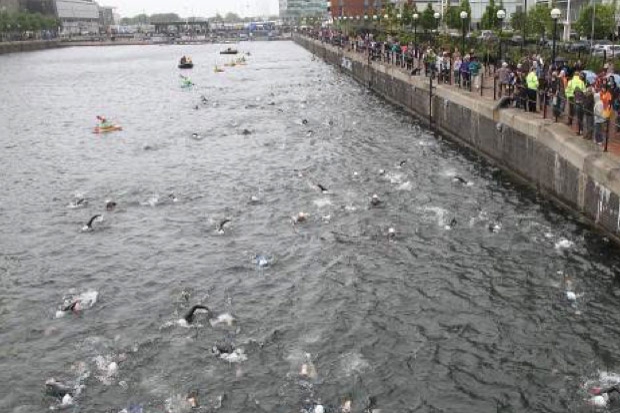
Since 1987 APEM Ltd have been supporting Salford City Council to monitor and manage the water quality and ecology in Salford Quays
+ Read more
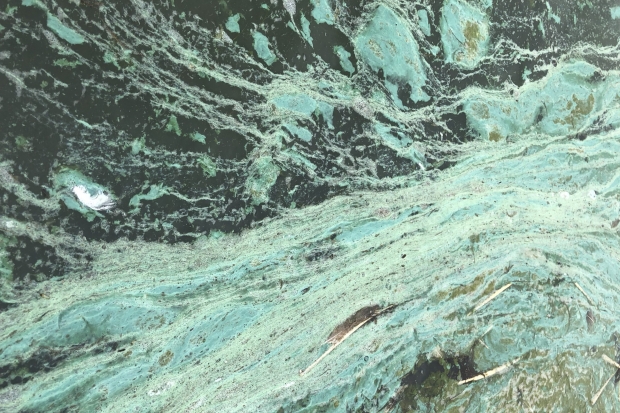
Algal blooms can cause a whole host of water quality issues and can be toxic to fish, birds, mammals and humans and produce taste and odour compounds
+ Read more